
Value Analysis Committee Guide for Medical Device Vendors
A hospital value analysis committee reviews a product’s clinical evidence, cost, and operational fit. Map the stakeholders and prepare a complete submission using the hospital’s own process and evidence requirements.
Updated September 2026
Our data
The worked cost table compares two products using disclosed fictional inputs, with a lower-volume sensitivity case and a separate peer-set calculation. These are reproducible planning examples, not hospital results. These examples were prepared with AI assistance.
What Value Analysis Committees Are and Why They Matter
Separate evaluation from purchasing. Build the case for whether the product fits the proposed use, then confirm the contract and purchasing steps with supply chain. Ask how physician preference, product standardization, clinical evidence, and existing agreements enter the hospital’s review. Approval for an evaluation should not be treated as a purchase order.
This guide provides a practical, vendor-facing walkthrough of the value analysis process: who sits on the committee, how submissions are evaluated, how to build a financial case, and how to identify and equip a clinical champion inside the hospital.
VAC Composition: Who Sits on the Committee
Supply chain. Ask who coordinates submissions and which existing contract or group purchasing organization (GPO) agreement should be the comparator. Prepare product identifiers, price units, storage conditions, shelf life, proposed stock levels, and the conversion plan. Distinguish the proposed product from any supplies or accessories it still requires.
Finance. Provide the baseline, annual usage, unit prices, one-time costs, recurring service costs, and the source for each input. Keep cash savings separate from capacity improvements. A shorter procedure does not automatically create cash savings or additional revenue; the model needs a supported mechanism and the hospital’s agreement.
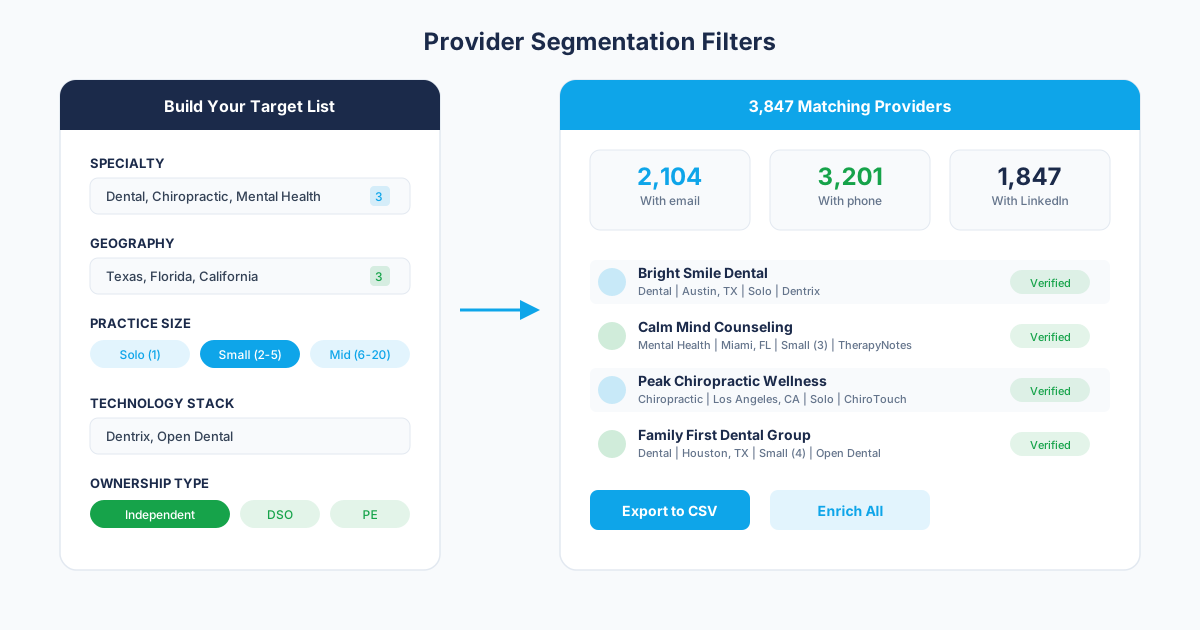
Value analysis committees vary in size and structure; however, most include representatives from five functional areas. Understanding who's in the room, and what each person cares about, determines how you frame your submission.
Clinical leadership. This includes OR directors, nursing leadership, department managers, and clinical specialists relevant to the product category. A surgical product submission will involve OR leadership; a wound care product will involve wound care nurses. These members evaluate clinical efficacy, ease of use, patient outcomes, and staff training requirements. They want to see clinical evidence, peer-reviewed studies, FDA clearance details, outcomes data from comparable institutions. Anecdotal claims don't survive this group.
Physicians. Many VACs include one or more physicians, often the medical director, chief of surgery, or specialty-specific department chiefs. Physician participation varies, some VACs have highly engaged physician members, others have physicians who attend intermittently. When physicians are present, they focus on clinical outcomes, procedural efficiency, and how the product compares to what they've used at other institutions. A physician member who supports your product is your strongest asset.
Quality and risk management. Some VACs include quality officers or risk management representatives who assess safety data, recall history, FDA warning letters, and liability considerations. For implantable devices, this scrutiny is intense. Have your safety data organized: adverse event reports, post-market surveillance data, and any relevant FDA documentation.
Infection prevention, pharmacy, and IT. Depending on the product, additional stakeholders may join. Drug-eluting devices involve pharmacy. Connected devices involve IT/biomed. Products with sterilization requirements involve infection prevention. Ask the supply chain contact who will be reviewing your submission so you can prepare materials for each stakeholder.
The Value Analysis Process: Six Steps From Submission to Decision
Use the following six steps as a preparation framework, then map them to the hospital’s actual policy, forms, and decision owners.
Step 1: Product request initiation. Someone inside the hospital, usually a physician or department head, requests that a new product be evaluated. This is the trigger. Without an internal request, most VACs will not review a product submitted by a vendor directly. Your first job as a vendor is not to submit to the VAC yourself; this is to get a clinician inside the hospital to submit the request on your behalf. This is why the clinical champion (discussed in the next section) is so important.
Step 2: Submission package preparation. Obtain the hospital’s current form and complete it with the internal requester. Include the use case, product specifications, evidence summary, comparator, price units, implementation plan, and requested supporting documents. Make missing evidence visible instead of filling a field with a marketing claim.
Step 3: Preliminary review. Check the packet against the receiving team’s requirements before the deadline. Ask whether the proposal duplicates a contracted item, needs a GPO review, or triggers additional technical assessment. Keep a checklist of missing attachments, their owners, and the dates needed to put the submission on the agenda.
Step 4: Clinical evaluation / trial. If a submission passes preliminary review, the committee may define a clinical trial or evaluation period. Document the comparison method, user feedback, training, support, and decision criteria before the trial begins so the final recommendation reflects the agreed evidence.
Step 5: Committee review and vote. After the trial (or based on the submission alone for some product categories), the full VAC reviews the evidence and votes. Some committees use a simple majority; others require consensus. The vote considers clinical evidence, trial feedback, financial analysis, and strategic fit. This meeting is where your champion presents the case internally. You likely won't be in the room.
Step 6: Record the decision and implementation conditions. After review, obtain the written outcome, approved use, conditions, responsible teams, and any required follow-up. A limited evaluation, a restricted departmental approval, and an organization-wide conversion are different results. Confirm the contract, training, stock transition, and monitoring plan before use expands.
Building the Financial Case Using Hospital-Specific Data
A worked total-cost comparison
This fictional supply-conversion example assumes equal clinical suitability and 10,000 units per year. It excludes tax, discounting, reimbursement changes, and unproven clinical savings. Replace every input with the hospital’s evidence before using it in a submission.
| Cost item | Current product | Proposed product |
|---|---|---|
| Annual volume | 10,000 units | 10,000 units |
| Unit price | $30 | $25 |
| Annual product cost | 10,000 × $30 = $300,000 | 10,000 × $25 = $250,000 |
| One-time implementation and training | $0 | $100,000 |
| First-year total | $300,000 | $350,000 |
| Later annual total, same volume | $300,000 | $250,000 |
The recurring modeled saving is $300,000 − $250,000 = $50,000 per year. The first year costs $50,000 more after implementation. Simple payback is $100,000 / $50,000 = 2 years, assuming full adoption at the stated volume. Show that result beside the “keep current product” option so the committee can see the cash required to switch.
Test a lower-volume case. At 6,000 units, the $5 unit-price difference saves $30,000 annually, and simple payback becomes $100,000 / $30,000 = 3.33 years. If training delays adoption, start the savings clock when conversion occurs. If recurring service or inventory costs differ, add them before calculating payback.
Give the model an assumptions register: input, unit, source, date, owner, and confidence limit. Include disposal of old stock, compatibility, staff time, service, maintenance, consumables, and temporary parallel inventory where applicable. Keep an unmeasured reduction in complications outside the base case; it belongs in a separately sourced scenario and clinical review.
The financial case is where most vendor submissions are weakest. Generic ROI calculators with national average assumptions don't persuade a committee that reviews dozens of vendor pitches per year. What works is a financial case built on the hospital's own data, or on data specific enough to the hospital's situation that the committee trusts the numbers.
Start with the hospital’s current costs. Request the current product price, annual units, contract conditions, and switching costs from the hospital’s authorized team. Public cost reports can provide context, but should not be presented as a purchase ledger for a specific device. Label any estimate and keep it separate from a hospital-confirmed input.
Identifying and Equipping the VAC Champion
Give the internal requester a usable packet
Prepare an editable draft of the required form, a short evidence summary, the financial workbook, and a list of unresolved questions. For each study, record the population, comparator, outcome definition, observation period, and limitations. Let the clinician assess whether it applies to the proposed use; do not convert a manufacturer statement into independent evidence.
Agree on the training and evaluation support the requester needs. Name the people responsible for installation, first-use support, feedback collection, and issue escalation. Keep the hospital’s contact policy and the requester’s role clear before approaching other stakeholders.
If the proposal is deferred or declined, record the stated reason and what evidence could justify another review. A price issue, missing comparison, incomplete trial, and contract-timing issue need different responses. Confirm the institution’s resubmission rule instead of assuming a fixed waiting period.
No vendor wins a VAC approval alone. The most important factor in a successful value analysis submission is having a credible, motivated champion inside the hospital. This person, often a physician or senior clinician, submits the product request, presents the case to the committee, answers clinical questions, and advocates for approval during deliberation.
Who makes a good champion? The ideal VAC champion has three qualities: clinical credibility (the committee respects their judgment), direct experience with your product (they've used it at another institution, during a fellowship, or in a trial), and enough institutional influence to carry a vote. Department chairs, division chiefs, and medical directors are obvious choices. However, a well-respected mid-career surgeon who consistently participates in committees can be equally effective. What doesn't work: a new physician who hasn't built trust yet, or a physician who champions many new products (the committee learns to discount their enthusiasm).
How to identify potential champions. Look at physician backgrounds using provider data and public sources. Where did they do residency and fellowship? (They may have used your product during training.) Where did they work before this institution? (They may have used your product at a previous employer.) What clinical interests or publications do they have? (Physicians who publish on a topic related to your product are natural champions because they have academic credibility on the subject.) What committee assignments do they hold? (A physician who already sits on the VAC is an obvious target; however, even membership on quality or safety committees suggests engagement with institutional improvement.)
Avoid the common mistake: going around the champion. Some vendors try to lobby multiple VAC members directly, bypassing their champion. This backfires. Committee members notice when a vendor contacts them independently, and it can undermine your champion's credibility ("if the product is so good, why is the vendor doing their own lobbying?"). Work through your champion. If the champion needs help reaching a specific committee member, ask them to make the introduction. Keep the champion in control of the internal process.
Benchmarking Against Peer Institutions
- Define the comparison set. Select the facility type, service line, size range, case mix, geography, and observation period relevant to the proposed use.
- Reconcile adoption evidence. Match the candidate institutions to documented customer records and confirm permission to use any named reference. Do not treat a logo as proof of a particular result.
- Normalize the measure. Compare the same outcome definition and denominator. Separate a per-case measure from total annual spend and distinguish before-and-after observations from controlled comparisons.
- Explain exclusions. Retain reasons for leaving out a facility, missing follow-up, or incompatible measurement. Show where the target hospital differs from the reference set.
For a fictional adoption check, 6 documented users among 14 matched institutions would be 6 / 14 = 42.9% of that defined set. It says nothing about clinical benefit. A complication or time-saving claim needs its own evidence, denominator, and limitations; adoption alone cannot supply those.
Hospitals are inherently comparative organizations. They benchmark clinical outcomes, financial performance, patient satisfaction, and staffing ratios against peer institutions. Value analysis committees apply this same comparative mindset to product decisions. Showing that comparable hospitals use your product, and the results they've achieved, is one of the most effective arguments you can make.
Peer benchmarks can frame a value-analysis discussion, but they do not replace the hospital’s own baseline. Record the benchmark’s year, facility type, case definition, and source, then show where the hospital’s volume or workflow differs. Keep modeled savings separate from observed costs so the committee can challenge assumptions without losing the underlying evidence.
Offer site visits to reference customers. The most powerful form of peer benchmarking is a site visit. If a VAC member can visit a comparable hospital, observe the product in use, and speak directly with the clinical team, that carries more weight than any slide deck. Coordinate with your reference customers to make these visits possible. Prepare both sides: brief your reference customer on what to highlight, and brief the visiting committee member on what to look for. A well-executed site visit often tips a borderline decision to approval.
What Goes in a VAC Submission Packet? A Stakeholder Checklist
Request the meeting calendar, submission deadline, technical-review lead times, and process for an incomplete packet. Work backward from those dates to assign the evidence, pricing, trial plan, and approvals. This guide does not assume a monthly meeting schedule or a standard review duration.
Build the packet around the questions each stakeholder needs answered. Use the checklist below to review coverage, then confirm the hospital’s actual document requirements and participants.
| Committee member | What they check first | Documents to include |
|---|---|---|
| Supply chain chair | Duplication against current contracts | Contract references, comparable price units, stock levels, shelf life, and conversion plan |
| Clinical leadership | Evidence quality and training burden | Peer-reviewed studies, FDA clearance letter, in-service training plan |
| Physician members | Outcomes versus what they use today | Head-to-head outcomes data, peer institution adoption list |
| Finance | Total cost of ownership and assumptions | TCO model with implementation costs, payback timeline, and separately supported reimbursement assumptions |
| Quality and risk | Recall and adverse event history | Post-market surveillance summary, MAUDE report history, liability documentation |
Two additions separate packets that clear preliminary review from packets that bounce. First, a one-page executive summary up front that states the request, the clinical rationale, and the net financial impact in three paragraphs. Committee members skim before they read. Second, a completed version of the hospital's own submission form. Many hospitals maintain their own standardized form, and submitting on their template instead of your slide deck signals you have done this before.
Frequently Asked Questions
Can a vendor present directly to the value analysis committee?
Policies vary by institution. Some VACs invite vendors to present during a specific portion of the meeting. Others rely entirely on the submission package and the internal champion's presentation. A few prohibit vendor contact with VAC members entirely. Ask the supply chain contact about the committee's policy. Even when direct presentations are allowed, your champion's endorsement matters more than your pitch, prepare them thoroughly.
Do software and digital health products go through value analysis?
Increasingly, yes. Connected devices, remote monitoring products, and clinical software that touches patient care now route through VAC review at many systems, usually with IT and biomedical engineering added as reviewers. Pure back-office software more often goes through an IT governance process instead. If your product stores patient data or integrates with the EHR, expect a security review to run in parallel with clinical evaluation and budget extra time for it.
What should a value-analysis submission make easy to verify?
Make the clinical use case, evidence, implementation needs, affected departments, training plan, and measurement approach easy to trace. Label assumptions and unresolved items clearly.
How should vendor claims be presented?
Tie each claim to the source, population, measurement method, and date. Separate published evidence from local projections and define how the committee can test the expected result.
What belongs in the post-trial record?
Preserve the agreed protocol, user feedback, operational issues, outcomes, exceptions, and final rationale. A future reviewer should be able to reconstruct why the recommendation changed or stayed the same.
Sources and References
Related Resources
Get the Provider Data You Need
Tell us what you're looking for. We'll build a custom list matched to your target market.
“In a world where list acquisition is full of smoke and mirrors, Provyx is a company built on integrity.” Brandon Seigel, CEO & Founder, Wellness Works Management Partners · Read the case study