
Data-Driven Cold Calling for Healthcare Sales
Pre-call research using provider data turns generic cold calls into relevant conversations. Here is the workflow.
Updated April 2026
Our data
Three planning calculations below cover research time, call-window rates, and required dials. All inputs are illustrative; none are observed healthcare response benchmarks. These examples were prepared with AI assistance.
Why Cold Calling in Healthcare Requires Better Data
Generic cold calls fail here. "Hi, I'm calling from [company], and we help healthcare organizations improve outcomes" will get you hung up on or routed to voicemail. The person on the other end has heard a version of that pitch dozens of times. They have no reason to stay on the line.
This guide walks through the complete pre-call research workflow, optimal call timing, data-informed opening lines, and gatekeeper strategies, written specifically for healthcare sales. The advice here applies whether you're selling medical devices, health IT, staffing services, or revenue cycle solutions.
The 5-Minute Pre-Call Research Workflow
Treat five minutes as a planning budget for an account you can identify, not a guaranteed research time. The suggested allocations below total 300 seconds: 30 + 60 + 60 + 90 + 60. If a name or location conflicts across sources, stop and resolve it before using that fact in an opener. Ten accounts at five minutes each need 50 minutes of preparation before dialing.
Step 1: NPI lookup (30 seconds). Compare the registry name, taxonomy, and listed address with the intended practice. Keep the NPI as an identity reference, then verify the current location on the practice website. A registry entry alone does not establish a current employer, purchasing role, or direct phone number.
Step 2: Practice size and structure (60 seconds). Note the named clinicians, locations, and any supported group relationship. Use a small practice, multi-site group, or system affiliation to decide which routing question to ask. Headcount alone does not tell you who can authorize a purchase.
Step 3: Technology detection (60 seconds). Check a current portal link, practice page, or job posting for a relevant system. Save the exact evidence and date. A portal logo or job requirement can support a question about the workflow; it does not establish the entire installed stack or a willingness to switch.
Step 4: Decision-maker identification (90 seconds). Start with the role tied to the buying decision: practice administrator, office manager, department head, or medical director. Use a current business number when one is published, confirm the person's current employer, and record the source date before outreach.
Step 5: Trigger event scan (60 seconds). Has anything changed recently? New location opened, new physician joined, leadership change, merger announcement, or new construction. Check your data platform's update alerts, a quick Google News search, and the practice's own website. A trigger event gives you a reason to call beyond "I want to sell you something." It turns a cold call into a timely call.
Timing Your Calls: Test the Local Schedule
Ask the office which business-contact route and time it prefers. Record the location’s time zone, published hours, role, and any requested callback window. A specialty label cannot tell you a particular physician’s clinic or operating schedule.
| Contact type | What to confirm | What to record |
|---|---|---|
| Physician or clinical lead | Whether commercial calls should go through an administrator | Requested route and callback time |
| Practice administrator | Which hours are suitable for vendor questions | Local time zone and office preference |
| Hospital department contact | Whether procurement or a department office handles first contact | Named routing contact and submission process |
| Multi-location group | Which team handles this product category | Central or local responsibility, with confirmation date |
Compare two permitted windows within the same role and account segment. Alternate similar accounts between the windows and keep the script and outcome definitions consistent. Count wrong numbers, voicemail, front-desk conversations, and intended-role conversations separately. A better result in one small batch is a hypothesis to test again, not a universal “best hour.”
Illustrative timing test: 40 dials in one window produce 4 intended-role conversations; 40 in another produce 6. The rates are 4 / 40 = 10% and 6 / 40 = 15%. The second window produced two more conversations in this fixture, but account mix and repeat attempts can affect the comparison. Keep those factors in the log before changing the whole schedule.
The Data-Informed Opening: First 15 Seconds
Use one verified observation, then ask a question the contact can answer. The sample names and companies below are fictional scripts. Replace every observation with something you have checked; if you cannot substantiate it, leave it out.
The pattern: name, company, specific observation, question. Not "Hi Dr. Patel, I'm with MedTech Corp and we help practices like yours improve efficiency." Instead: "Hi Dr. Patel, I'm Alex from MedTech Corp. I noticed your group recently added a third orthopedic surgeon at your Westside location, are you seeing more demand for [specific procedure]?" The second version works because it references something specific and true about the practice. It signals you're not reading from a script.
What to reference, based on your pre-call data. Practice size changes (new providers added), technology (their current EHR or device), specialty-specific trends (tie your product to their clinical focus), organizational changes (new location, affiliation change), or publicly available metrics. The reference should be neutral or positive, don't open with "I see your patient satisfaction scores dropped." Use data to show you understand their world rather than to create anxiety.
For gatekeepers. When you reach a front desk or receptionist, the data-informed approach still applies; however, differently. Know the name of the person you're trying to reach (don't say "the person who handles purchasing"). Know their title. If asked "what is this regarding," have a specific, non-salesy answer: "I'm following up on the technology assessment Dr. Chen's team is running" or "I have information about [specific topic] that Dr. Chen's office manager requested we send over." This works only if it's truthful, fabricating a reason will backfire when the gatekeeper checks.
Follow-up. If the contact requests information by email, send the specific item and record the agreed next step. Reference a voicemail only if you left one. Evaluate channels against your own qualified conversations and meetings, and follow the organization’s approved contact and suppression process.
Handling Gatekeepers When You Know the Org Structure
A voicemail that preserves the context
Draft a short message with your name, company, reason for calling, and callback number. For a fictional example: “This is Alex at MedTech Corp. Your website lists a new Westside location. I’m calling about equipment planning for that site. You can reach me at [business number].” Do not imply a referral, requested follow-up, or existing relationship unless it is true.
When a receptionist offers a different route, record it against the account. Use a secondary location only when it is the relevant business contact point or you have been directed there. Avoid repeating the same pitch to multiple sites after a central office has given you a clear answer.
Healthcare organizations have more gatekeeping layers than most industries. Physician practices have front desk staff. Hospitals have operators, administrative assistants, and department coordinators. Getting past these layers is a common challenge; however, having provider data gives you structural advantages most callers don't have.
Know the routing question before you call. Use a supported current name and role where available: “This is Sarah from DataMed. Could you direct my vendor question about [topic] to Karen Thompson, your listed practice administrator?” The names are fictional. State the commercial purpose clearly and do not imply an existing relationship.
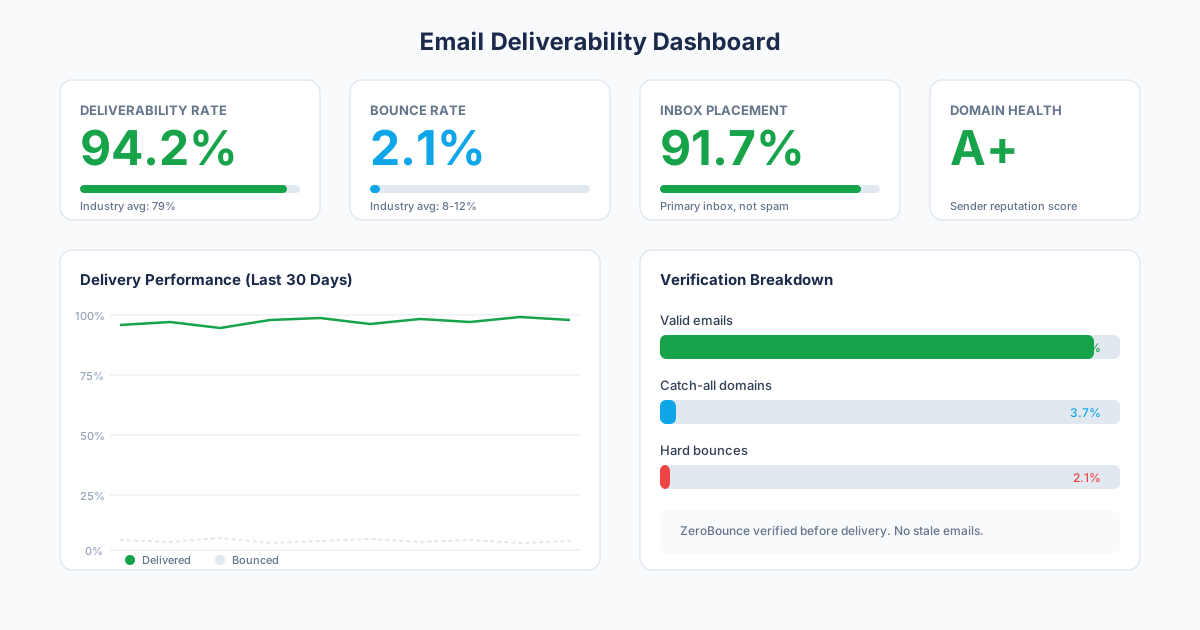
Test direct and main-line fields separately. Record whether a number reaches the named person, a shared office, voicemail, or the wrong party. Use the preferred business route confirmed by the organization. A vendor label saying “direct” is a field to test, not a promised connect rate.
Use location context. Confirm that the person you need works with the location you are calling. Keep shared administrators linked to their supported locations without counting the same person as a new prospect at every site.
Be honest about who you are. Deceptive gatekeeper tactics, pretending to be a patient, claiming a personal relationship, or being vague about your purpose, create short-term wins and long-term problems. Healthcare front desk staff talk to each other. Word gets around. Instead, be direct and respectful: state your name, your company, and that you have information relevant to [specific topic] for [specific person]. If the gatekeeper asks you to send an email instead, take the email address and do it. That email, with a subject line referencing the call, often gets opened.
Building a Repeatable Cold Calling System with Provider Data
Work backward from conversations
Define a connect as reaching the intended role, then use your observed rate to estimate activity. In an illustrative plan, 5 desired conversations divided by a 10% connect rate gives 50 dials. If the observed rate is 5%, the same target needs 100 dials. These are arithmetic scenarios, not healthcare benchmarks or forecasts.
Check the time budget as well. Researching 50 separate accounts at five minutes each takes 250 minutes before call time and follow-up. Reuse verified account research for a planned sequence, refresh changed facts, and set a workload that fits the available hours. More dials cannot compensate for a list that consistently reaches the wrong role.
| Log field | Example entry | What it helps diagnose |
|---|---|---|
| Account and location | Fictional Westside group, location A | Wrong-site calls and duplicate accounts |
| Role and number type | Administrator; main business line | Routing versus contact-data quality |
| Source and check date | Practice location page, date checked | Stale research |
| Attempt and local time | Second attempt, recorded local time | Timing and repeat-attempt effects |
| Outcome | Wrong number, voicemail, intended-role conversation, meeting | Where attempts stop progressing |
| Next step | Requested email, callback date, suppression, correction | A repeatable follow-up queue |
Reserve a call block for prepared accounts, with time afterward to complete notes and requested follow-up. A 60-minute block is a scheduling choice, not a productivity claim. Capture essential corrections and objections as they occur so they do not disappear while you finish the block.
At the end of the week, compare the same segment across periods. Separate attempts from unique accounts and repeat calls from first attempts. Inspect the actual records behind a change in rate: a new territory, a different role mix, or a number-type change can explain the result without showing that an opener improved.
Repair bad data at the field level. If 10 of 50 attempted numbers are disconnected, the observed disconnected-number share is 10 / 50 = 20% for that batch. Keep the outcome date and source, remove the failed channel from the next run, and investigate whether the practice moved. Do not label the entire account closed from one failed number.
Individual call techniques matter; however, what separates productive reps from struggling ones is the system. A repeatable, data-driven cold calling system ensures consistent activity and measurable improvement over time.
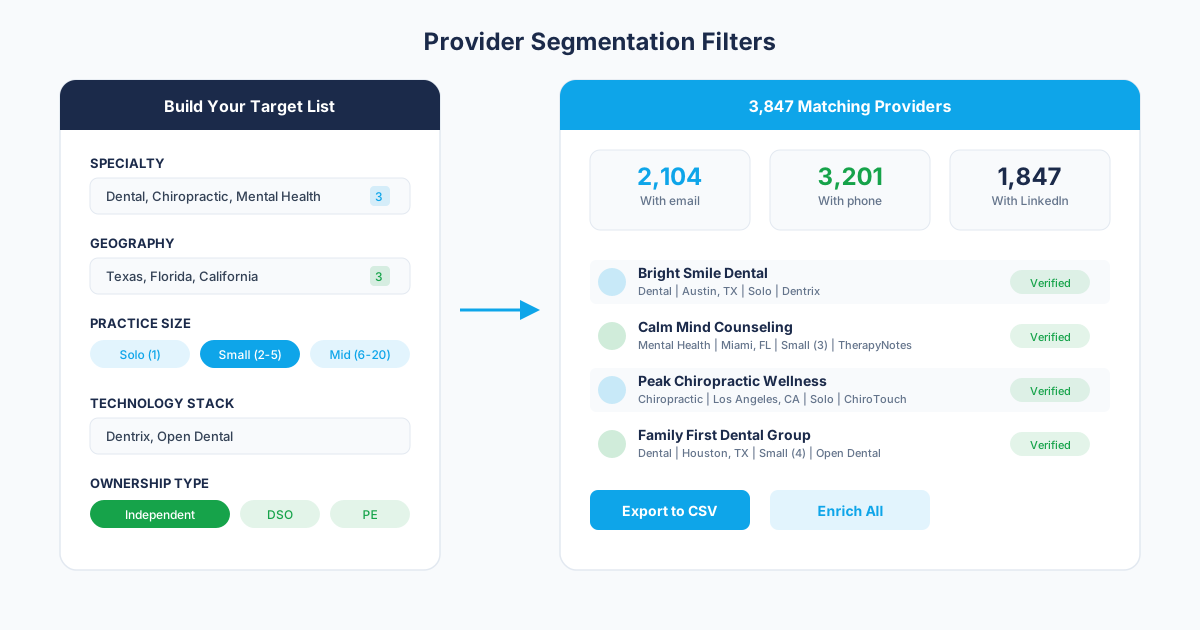
Build segmented call lists from provider data. Don't call from a single flat list. Segment by practice size, specialty, geography, installed technology, or any other relevant dimension. Then prioritize: call your highest-fit accounts first each day, when your energy and focus are sharpest. Provider data platforms with filtering capabilities let you build these segments in minutes. Refresh your lists monthly to account for new practices, closures, and provider changes.
Where Do You Get Provider Phone Numbers for Cold Calling?
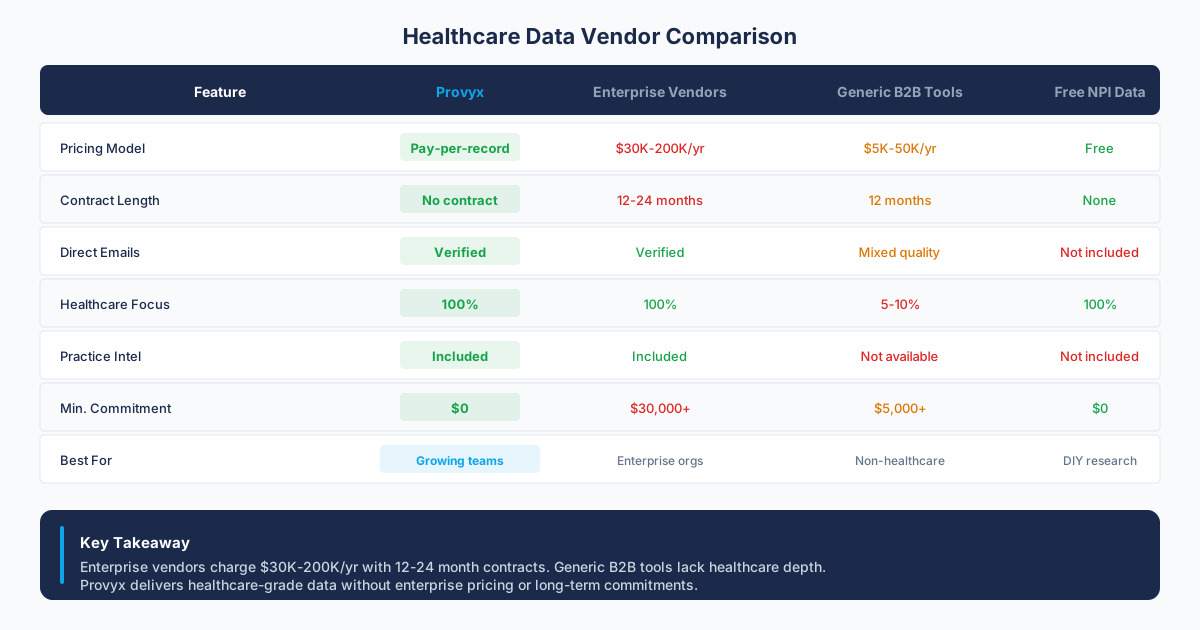
General B2B databases. Include them in an evaluation when they offer the administrative roles you need. Test the number type, practice match, and specialty context on the same account set used for a healthcare-specific supplier. Do not infer coverage from a vendor’s total database size.
Compare source types by the identity, role, and channel evidence they provide. Test coverage on the same target segment before comparing suppliers.
The NPI Registry is a public identity source and often includes a self-reported practice phone. Treat that number as an observed registry field rather than a direct line. Confirm the practice and channel before a calling campaign, and retain stale or shared numbers as exceptions.
Practice websites and Google Business profiles. More current than registry data for the main line, since practices keep their patient-facing number working. Still a gatekeeper number. Useful for confirming a practice is open and operating at the listed address before you burn a dial.
Healthcare-specific provider data vendors. Built from the provider universe outward: NPI-linked records with practice context, decision-maker names, and business phone numbers verified at delivery. This is what Provyx builds. Each list is assembled when ordered, and verified mobile numbers are available as an add-on, billed per number found. For a calling program, the practical difference shows up in the connect rate: a verified list with named contacts turns more of your dials into conversations with the right person.
Frequently Asked Questions
Should I cold call physicians directly or target practice administrators?
It depends on your product and practice size. For clinical products (devices, drugs), physicians are often the initiator of the buying process, so reaching them matters. For operational products (software, services, supplies), the practice administrator or office manager is usually the decision-maker. In larger organizations, targeting the administrator first can be more efficient because they can champion your product internally and connect you with the right clinical contacts.
Is cold calling still effective in healthcare, or should I focus on email and social selling?
Choose channels using your own measured results for the intended roles and market. Compare qualified conversations and meetings, time spent, data quality, and objections. This guide does not establish that calling converts better than email or social outreach.
Do TCPA and Do Not Call rules apply to B2B calls to medical practices?
Have the calling process reviewed for the number type, dialing technology, message, recipient, and applicable jurisdiction. A business-contact label alone should not approve a campaign. Use the FCC’s telemarketing guidance as a starting reference and record the rules and suppression process approved for the actual program.
Where can I find direct phone numbers for practice administrators?
Check current practice pages, the organization’s routing guidance, and supplier records for an appropriate business contact number. Confirm whether it reaches the named person or a shared office, and retain the check date. Compare main-line and claimed direct numbers separately; no source category guarantees a direct connection.
What should a call-list sample test?
Test whether each number reaches the intended practice or role, record wrong-party and disconnected outcomes, and compare direct and main-line fields separately. Keep the call date with the result.
Sources and References
Related Resources
Get the Provider Data You Need
Tell us what you're looking for. We'll build a custom list matched to your target market.
“In a world where list acquisition is full of smoke and mirrors, Provyx is a company built on integrity.” Brandon Seigel, CEO & Founder, Wellness Works Management Partners · Read the case study