
DSO and MSO Consolidation Data for Vendor Sales
Consolidation has reshaped specialty medicine. Selling into DSOs and MSOs means selling to platform CEOs and corporate procurement, not individual practices.
2026-04-09
Consolidation Is the Single Biggest Shift in Specialty Medicine
If you sell into dental, dermatology, ophthalmology, gastroenterology, orthopedics, or any other specialty that's been a private equity target over the last decade, the buyer you knew five years ago doesn't exist anymore. The independent practice you used to call on has been acquired by a Dental Service Organization (DSO), a Medical Service Organization (MSO), or a private equity-backed Physician Practice Management (PPM) platform. The decision-maker isn't the practice owner. It's a procurement director, a regional VP of operations, or the CEO of a 200-location platform.
According to the ADA Health Policy Institute, DSOs now affiliate with roughly 13% of all US dentists and a higher percentage of dental practice locations. In dermatology, MSO affiliation tops 40% according to industry research. Ophthalmology, GI, ortho, women's health, and primary care are all consolidating fast. The independent specialty practice is becoming the exception, not the rule.
If your sales motion still treats every practice as an independent buyer, you're working with maps of a country that no longer exists.
What DSOs and MSOs Actually Are
DSOs (Dental Service Organizations) and MSOs (Medical Service Organizations) are management companies that provide non-clinical support to affiliated practices. They handle billing, payroll, IT, marketing, procurement, HR, real estate, and compliance. The clinical practice (the dentist, the dermatologist, the GI specialist) typically remains owned by physicians or operates under a friendly-PC structure required by state corporate practice of medicine laws.
The economic structure varies. Some DSOs and MSOs own the physical assets, employ staff, and contract with the clinical practice for services. Others operate as service companies that provide back-office support to independently owned practices. The legal structures are complex, but the buying behavior is consistent: procurement is centralized at the platform level, not the individual practice level.
The Consolidated Specialties: Where It Matters Most
Dental (DSOs)
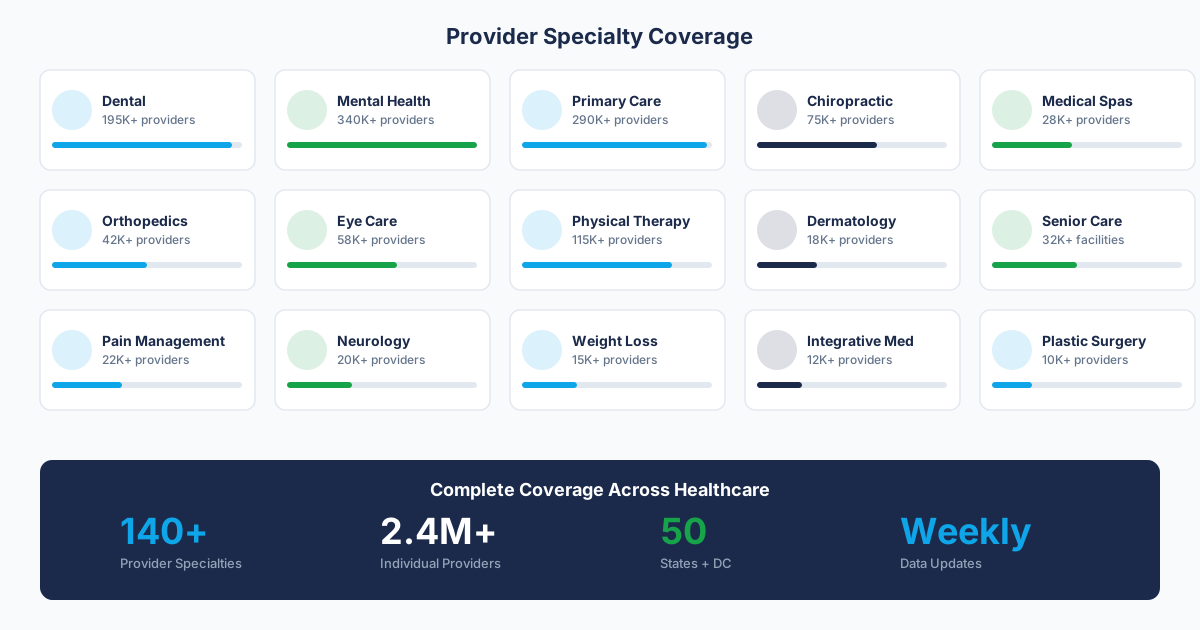
Dental consolidation has been ongoing for over a decade. The largest DSOs (Heartland Dental, Pacific Dental Services, Aspen Dental, Smile Brands, MB2 Dental, Dental Care Alliance, and dozens of regional players) collectively manage thousands of dental practices. According to ADA data, DSO-affiliated dentists now make up roughly 13% of the dental workforce and a higher percentage of total practice locations. The trend is accelerating.
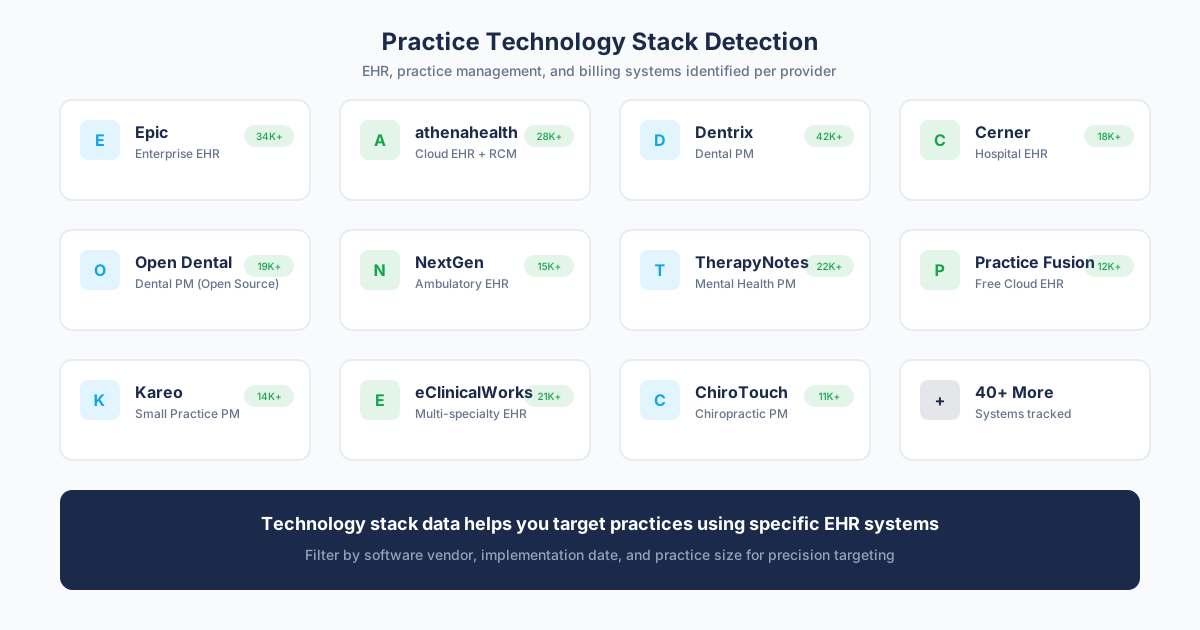
DSO buying covers: dental supplies and equipment, dental imaging systems, practice management software, patient communication platforms, marketing services, payment platforms, and clinical consumables. Equipment manufacturers (Dentsply Sirona, Henry Schein, Patterson Dental) have shifted significant resources to DSO accounts because the contract size dwarfs individual practice contracts.
Dermatology (MSOs)
Dermatology has been the most aggressive PE consolidation play in medical specialties. The largest dermatology platforms (Schweiger Dermatology Group, Forefront Dermatology, US Dermatology Partners, Anne Arundel Dermatology, Epiphany Dermatology, Riverchase Dermatology, and dozens of regional platforms) collectively manage hundreds of practices. MSO affiliation in dermatology exceeds 40% of practices in many markets.
Dermatology MSO buying covers: dermatologic surgical instruments, biologic medications (especially for psoriasis, atopic dermatitis, and hidradenitis), Mohs surgery equipment, cosmetic device platforms (laser, IPL, body contouring), skincare product lines, and practice management software.
Ophthalmology (MSOs)
Ophthalmology consolidation focuses on cataract surgery, LASIK, and increasingly, retina and glaucoma practices. Major platforms include EyeCare Partners, Retina Consultants of America, US Eye, Ophthalmology Consultants of America, and several regional groups. The economics work because cataract surgery is high-volume and ophthalmology equipment is high-cost.
Ophthalmology MSO buying covers: cataract IOLs (intraocular lenses), surgical instruments, diagnostic imaging equipment (OCT, fundus cameras, biometry), practice management software, and increasingly, AI imaging analysis tools.
Gastroenterology (MSOs)
GI consolidation accelerated after the FDA simplified ASC reimbursement for screening colonoscopies. Major platforms include GI Alliance, US Digestive Health, Gastro Health, One GI, and several regional players. GI MSOs typically own or operate ambulatory surgery centers in addition to clinical practices.
GI MSO buying covers: endoscopy equipment, biologic medications (Crohn's, ulcerative colitis), ASC supplies, anesthesia equipment, practice management software, and patient engagement platforms.
Orthopedics (MSOs and Hospital-Affiliated)
Orthopedic consolidation has been slower than dental and dermatology because the high acuity of orthopedic care creates more hospital integration. But MSO platforms exist (HOPCo, OrthoNebraska, Resurgens Orthopedics in regional markets) and the trend is growing. Hospital systems also acquire ortho groups directly.
Other Specialties
Women's health, urology, ENT, primary care, and behavioral health all have MSO/PPM activity. The pace varies by specialty and region, but the direction is consistent.
How Consolidated Buying Actually Works
At a DSO or MSO platform, vendor decisions typically flow through:
- Platform CEO: approves strategic vendor relationships and large contracts
- VP of Operations: manages day-to-day vendor performance and operational integration
- Chief Procurement Officer / VP Supply Chain: negotiates contracts and manages vendor relationships
- Chief Medical Officer / Clinical Director: evaluates clinical product fit and drives clinical adoption
- Regional VPs: influence vendor selection for their region's practices
- Director of IT / CTO: approves technology integrations
- Director of Marketing: approves marketing technology and services
- Practice managers and clinicians: influence platform-level decisions but rarely make them independently
For vendors, this means the sales motion is fundamentally different. Instead of running 200 independent practice sales cycles, you run one platform sales cycle with 200-practice contract value. The cycle is longer (6-18 months typical for a new platform vendor relationship) but the contract size is much larger.
Building DSO and MSO Target Data
Step 1: Identify Active Platforms by Specialty
Start with industry trade publications, Pitchbook PE deal data, and platform corporate websites. The largest platforms publish their location count and parent PE sponsor. Smaller and regional platforms require more digging through SOS filings and practice acquisition announcements.
Step 2: Map Affiliated Practices
For each platform, build a list of affiliated practice locations. This is harder than it sounds because platform websites don't always list all locations, practice acquisition announcements are scattered, and some platforms operate under multiple brand names. Cross-reference with state Department of Health practice license databases where available.
Step 3: Identify Platform Leadership
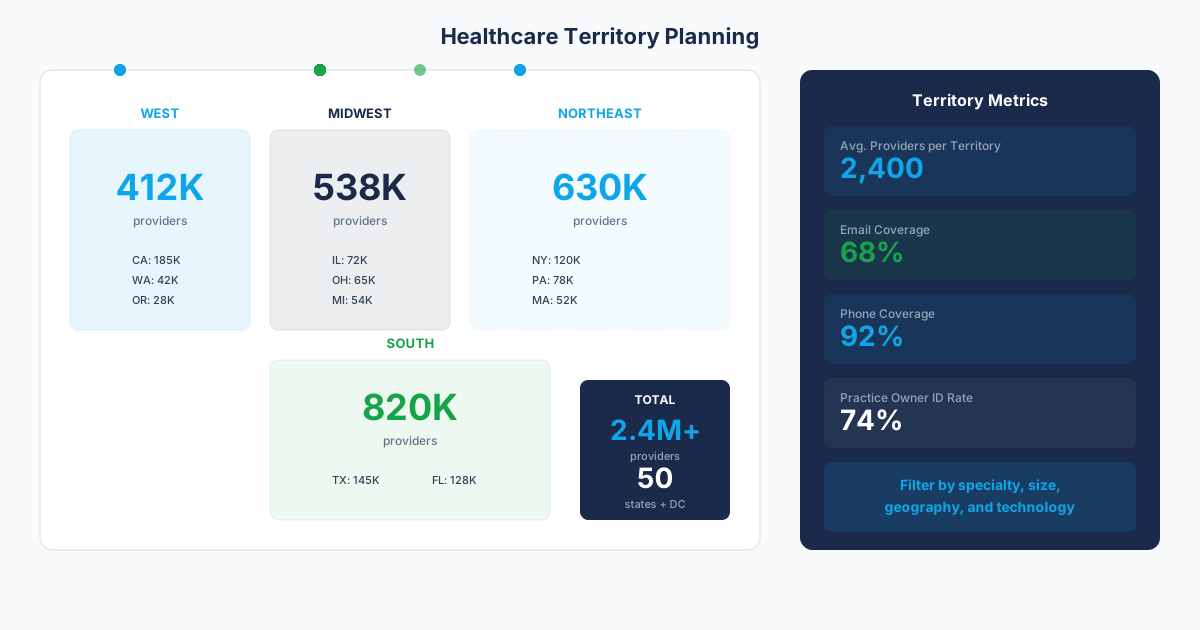
For each platform, identify: CEO, COO, CMO, CFO, VP Operations, VP Procurement, regional VPs, and the relevant specialty leadership (dental director, surgical director, etc.). LinkedIn Sales Navigator and direct corporate website pages are starting points. Press releases and PE deal announcements often name C-suite leaders.
Step 4: Map PE Sponsorship
For each platform, identify the PE sponsor and the lead deal partner. PE sponsors often hold board seats and influence strategic vendor decisions. They also recycle vendor relationships across portfolio companies. A favorable relationship with one PE sponsor can open doors at multiple platforms.
Step 5: Track Acquisition Activity
Platform acquisitions happen continuously. Tracking which practices were acquired in the last 6-12 months identifies platforms in growth mode and surfaces newly consolidated buyers who may be evaluating their vendor stack.
Mistakes Vendors Keep Making With DSO and MSO Sales
Mistake 1: Selling to Practices Instead of Platforms
Calling on a DSO-affiliated practice and pitching the dentist is wasted effort. The dentist can't switch vendors. The contract is held at the platform level. Your sales motion has to start with the platform.
Mistake 2: Treating All Platforms the Same
A 50-location regional dental platform and a 600-location national platform are completely different buyers. The regional platform may have a single CEO making most vendor decisions. The national platform has a procurement function with formal RFP processes. Don't pitch the same way.
Mistake 3: Missing PE Sponsor Influence
PE sponsors influence platform vendor decisions, especially for high-value contracts. Building relationships at the PE level (operating partners, deal partners, portfolio operations leads) creates leverage across multiple portfolio companies. Most healthcare vendors ignore the PE relationship layer.
Mistake 4: Ignoring Newly Consolidated Practices
When a platform acquires a previously independent practice, the practice typically reviews its vendor stack and migrates to platform-standard vendors over 6-18 months. This is the window when displacement is most achievable. Tracking acquisitions surfaces these opportunities before competitors notice.
What Good DSO and MSO Data Looks Like
For each platform in your target list, your database should include:
- Platform name and brand variations
- Specialty focus: dental, derm, ophthalmology, GI, ortho, etc.
- PE sponsor: name and lead deal partner
- Location count and geography
- Affiliated practice list: practice names, addresses, NPI for clinical leads
- Platform leadership: CEO, COO, CMO, CFO, VP Operations, VP Procurement
- Specialty leadership: chief dental officer, chief medical officer, etc.
- Recent acquisition activity: practices acquired in last 12 months
- Tech stack indicators: practice management software, EHR, patient comms platform
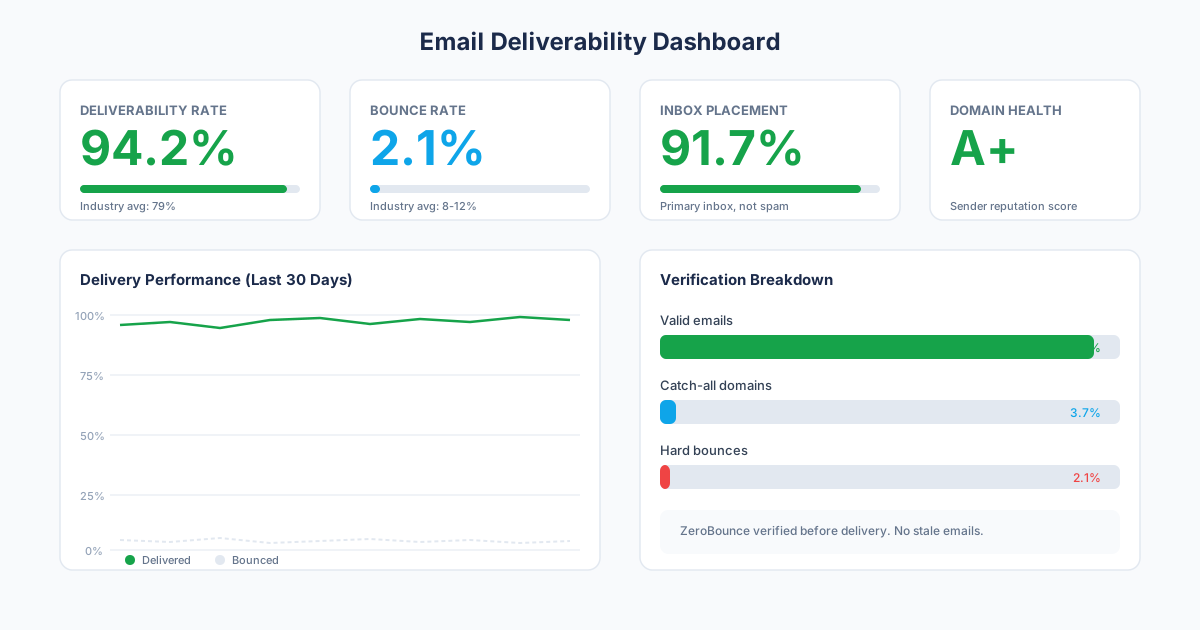
- Contact data: direct email, phone, LinkedIn for buying committee
This is the dataset that lets a vendor pivot from a 200-practice prospect list to a 5-platform prospect list with the same total addressable market. Request a sample of Provyx DSO and MSO platform data with full leadership and affiliated practice mapping.
Frequently Asked Questions
What is a DSO?
A Dental Service Organization (DSO) is a management company that provides non-clinical support services to affiliated dental practices. DSOs handle billing, payroll, IT, marketing, procurement, HR, real estate, and compliance while the clinical practice remains owned by dentists or operates under a friendly-PC structure required by state corporate practice of dentistry laws. DSO-affiliated dentists now represent roughly 13% of the US dental workforce.
What is an MSO in healthcare?
A Medical Service Organization (MSO) is the medical equivalent of a DSO. MSOs provide management services to affiliated physician practices in specialties like dermatology, ophthalmology, gastroenterology, orthopedics, and women's health. Most MSOs are private equity-backed roll-up platforms acquiring previously independent practices and standardizing operations across affiliated locations.
Which medical specialties are most consolidated?
Dermatology has the highest MSO affiliation, with platform-affiliated practices exceeding 40% in many markets. Dental DSO affiliation is around 13% of dentists and growing. Ophthalmology, gastroenterology, orthopedics, women's health, and behavioral health all have active consolidation. Primary care is consolidating through both PE platforms and large payor-owned platforms (CVS/Oak Street, Amazon One Medical, Walgreens VillageMD).
Who makes vendor decisions at a DSO or MSO?
Vendor decisions typically involve the platform CEO, VP Operations, Chief Procurement Officer or VP Supply Chain, Chief Medical Officer, regional VPs, and the relevant specialty clinical lead. Practice-level clinicians and managers influence decisions but rarely make them independently. The buying committee resembles a corporate procurement organization more than a clinical practice.
How do I sell into a DSO or MSO?
Treat the platform as an enterprise account. Identify the platform CEO and procurement leadership. Build relationships with regional VPs and the chief medical officer. Map the PE sponsor and operating partners who influence portfolio decisions. Expect a 6-18 month sales cycle for a new vendor relationship at scale. The deal size compensates for the longer cycle.
What does PE sponsorship matter for DSO and MSO sales?
Private equity sponsors hold board seats at most DSO and MSO platforms and influence strategic vendor decisions. PE sponsors also recycle vendor relationships across portfolio companies, so a favorable relationship with one PE firm can open doors at multiple platforms. Building relationships at the PE operating partner level is one of the highest-leverage moves a healthcare vendor can make.
Sources and References
Related Resources
Get the Provider Data You Need
Tell us what you're looking for. We'll build a custom list matched to your target market.
Trusted by healthcare sales teams, medical device companies, and health IT vendors across the US.